Puntarenas is two things at once: a historic port city on a narrow sandspit in the Gulf of Nicoya, and the name of Costa Rica’s largest province, which stretches along most of the Pacific coast, from Manuel Antonio and Santa Teresa to the Osa Peninsula.
The city is a stopover; the province is home to some of the most beautiful places in the country. Here is how to make sense of it, and where to stay for a luxury trip.
Key takeaways
- The city: a port on the Gulf of Nicoya, about 1.5 to 2 hours from San José, famous for its seafront and ferries.
- The province: the largest in Costa Rica, covering much of the Pacific coast and Cocos Island.
- Star destinations: Manuel Antonio, Santa Teresa, Dominical and Uvita, Monteverde and the Osa Peninsula.
- For a luxury stay: head to Santa Teresa or the central and southern Pacific rather than the port itself.
Puntarenas, the port city
The city of Puntarenas is built on a long, narrow sandspit reaching into the Gulf of Nicoya. In the 19th century, it was Costa Rica’s main Pacific port for coffee exports, and cruise ships still call here today.
Ticos come for the Paseo de los Turistas, the seafront promenade, and for a local ritual: the churchill, a mountain of shaved ice with syrup, condensed milk and powdered milk, eaten facing the sunset.
Puntarenas is also where the ferries leave for Paquera and Playa Naranjo, on the Nicoya Peninsula. It is the shortest route from the Central Valley to Santa Teresa and Montezuma.
Insider tip
If you take the ferry to the Nicoya Peninsula, arrive early in high season, especially on weekends and holidays: lines of cars form well before departure. A private transfer can handle the timing for you.
Puntarenas, the province
The province covers a long strip of the Pacific coast, from the Gulf of Nicoya down to the Panama border, and even includes Cocos Island, far out in the Pacific.
For travelers, that means extraordinary variety: surf villages, cloud forest, rainforest national parks and some of the wildest coastline in Central America.
The best of Puntarenas province
| Destination | Why go | Best for |
|---|---|---|
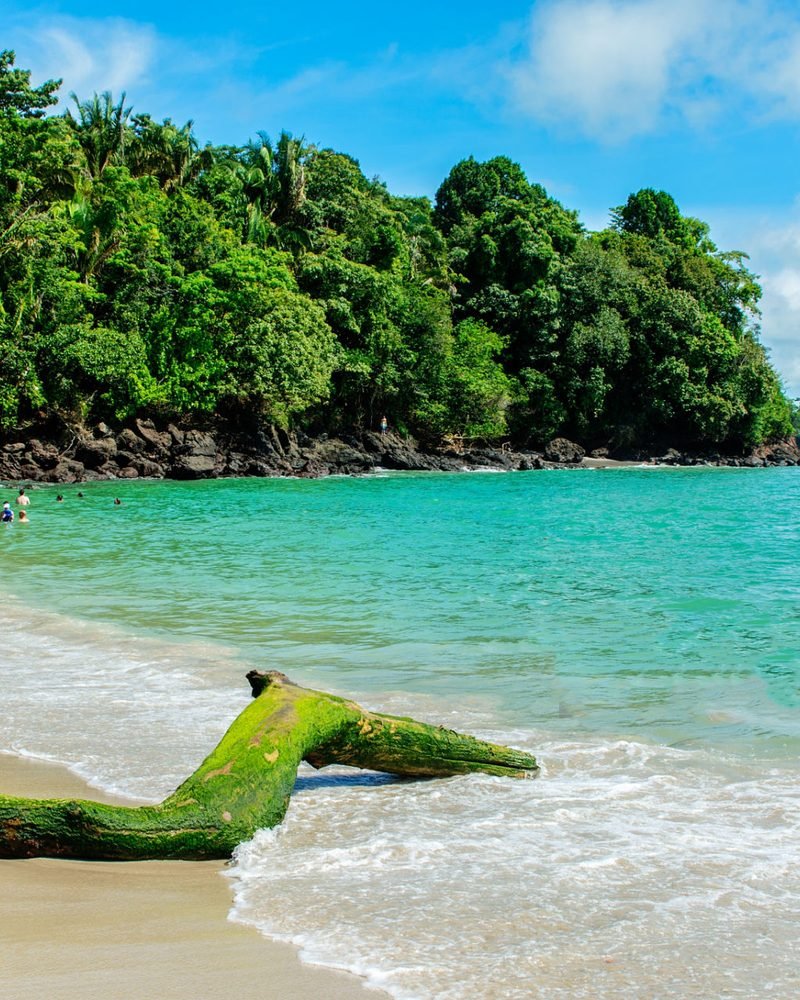
| Manuel Antonio | Rainforest meets the ocean; a celebrated national park | Wildlife and beaches in one place |
| Santa Teresa | Long surf beaches, yoga, unforgettable sunsets | Couples, surfers, wellness |
| Dominical and Uvita | Waterfalls, jungle and whale watching in season | Nature lovers, families |
| Monteverde | The famous cloud forest | Hiking, birdwatching |
| Osa Peninsula | One of the most biodiverse places on Earth | Adventure and remote eco-lodges |
Good to know
Santa Teresa and Montezuma belong to Puntarenas province even though they sit on the Nicoya Peninsula, which most people associate with Guanacaste. Administrative borders in Costa Rica often surprise first-time visitors.
Where to stay
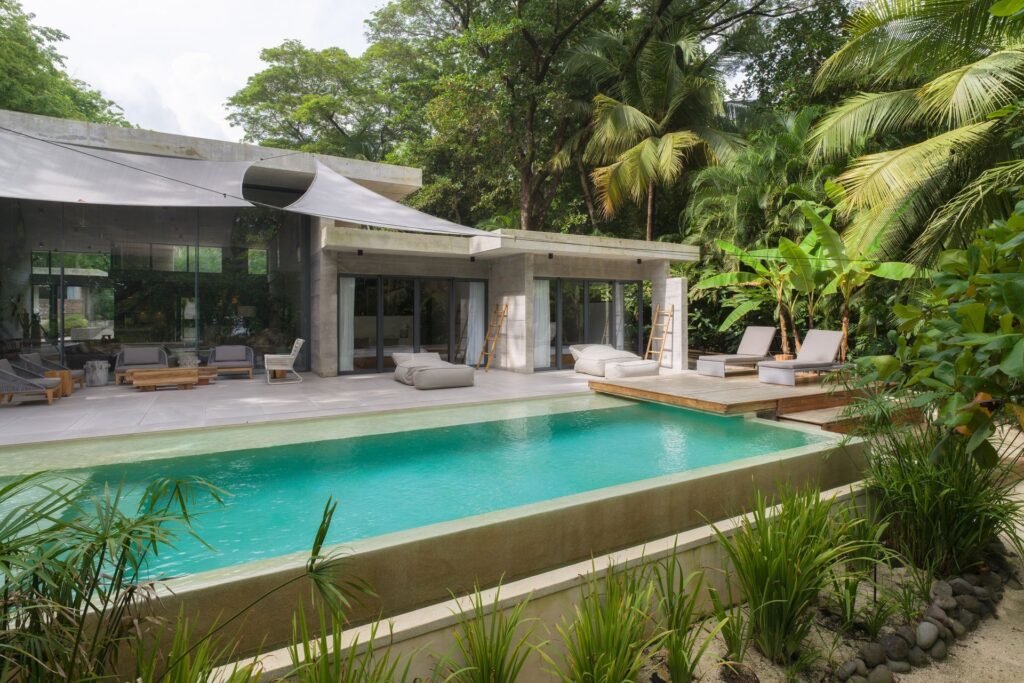
The port city itself is best enjoyed as a stop. For a luxury stay in the province, our guests usually choose between two very different atmospheres.
- Santa Teresa — beachfront villas with the Pacific at your feet, such as Casa Lanui (seven bedrooms, oceanfront) or Casa Taman.
- Manuel Antonio — ocean-view hotels above the rainforest, minutes from the national park. See our Manuel Antonio guide.
- Dominical and Uvita — jungle villas above wild beaches. Discover luxury villas in Dominical.
Many travelers combine the central Pacific with the beaches of Guanacaste or the volcanoes of Arenal, for two very different landscapes in one trip.
Getting around
| Route | Approximate time |
|---|---|
| San José airport (SJO) → Puntarenas city | 1.5 to 2 hours by road |
| San José airport (SJO) → Manuel Antonio | 2.5 to 3 hours by road |
| Puntarenas → Paquera (Nicoya Peninsula) | About 1 hour by ferry |
| Paquera → Santa Teresa | About 1 hour by road |
| San José → Quepos (Manuel Antonio) | Short domestic flight |
Watch out
Driving times in Costa Rica are longer than distances suggest: mountain roads, trucks and afternoon rain slow everything down. Avoid driving after dark on unfamiliar roads, and plan transfers in daylight.
Planning the Pacific coast?
Tell us your dates and the atmosphere you want, from surf to rainforest. We will suggest the right base and organize it with you.
Frequently asked questions
Is Puntarenas a city or a province?
Both. Puntarenas is a port city on the Gulf of Nicoya and the capital of Puntarenas province, the largest in Costa Rica, which covers much of the Pacific coast and Cocos Island.
Is Manuel Antonio in Puntarenas?
Yes. Manuel Antonio and Quepos are in Puntarenas province, on the central Pacific coast, about 2.5 to 3 hours by road from San José airport.
How far is Puntarenas from San José?
About 1.5 to 2 hours by road from San José and its international airport, depending on traffic on the Pacific highway.
Is Puntarenas worth visiting?
The port city is a pleasant stop for its seafront, its churchill desserts and the ferries to the Nicoya Peninsula. For a longer luxury stay, choose Santa Teresa, Manuel Antonio or the southern Pacific.
In short
Puntarenas the city is a charming port and a gateway; Puntarenas the province is a treasure chest of beaches, rainforest and wildlife.
Tell us what you dream of, and we will tell you which corner of it is for you.
- Instituto Costarricense de Turismo (ICT), regional information.
- Travel times: Allure Costa Rica field experience; indicative only.